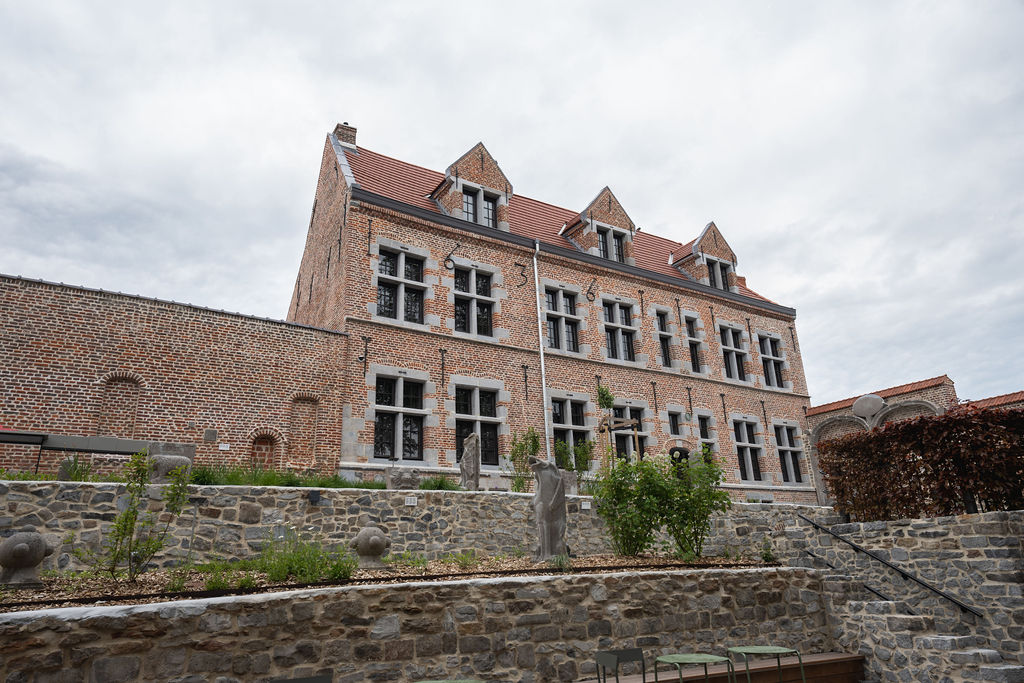
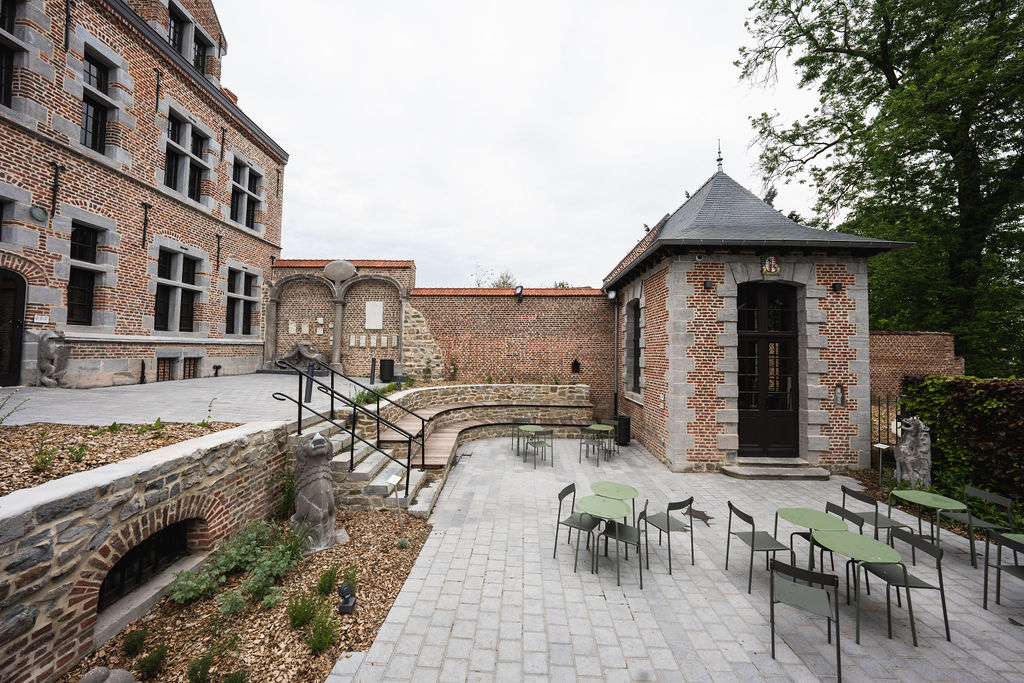
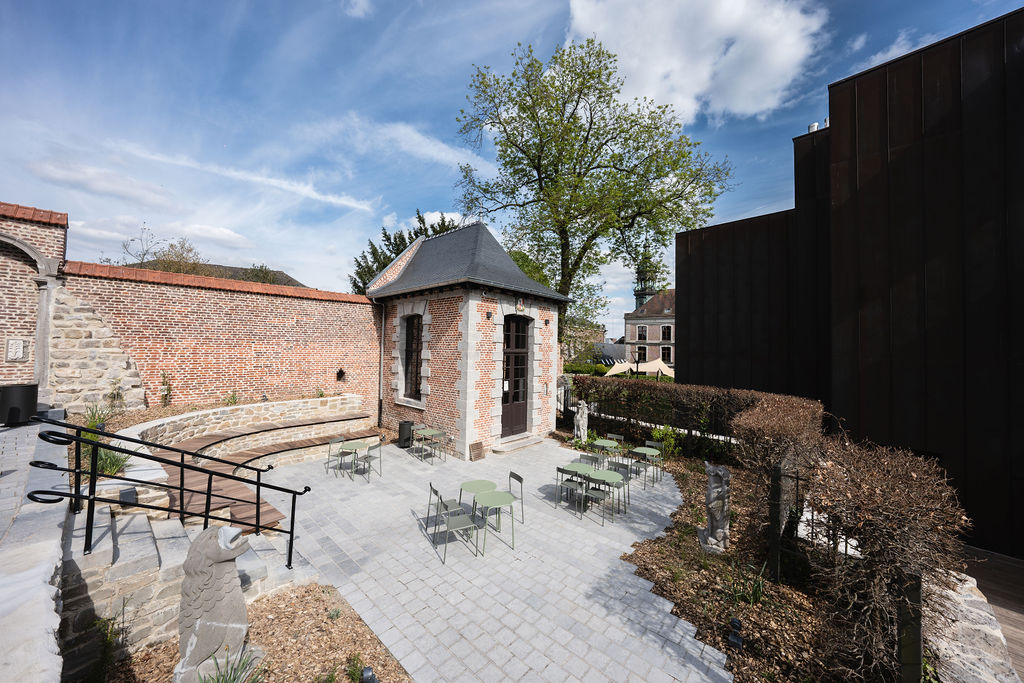
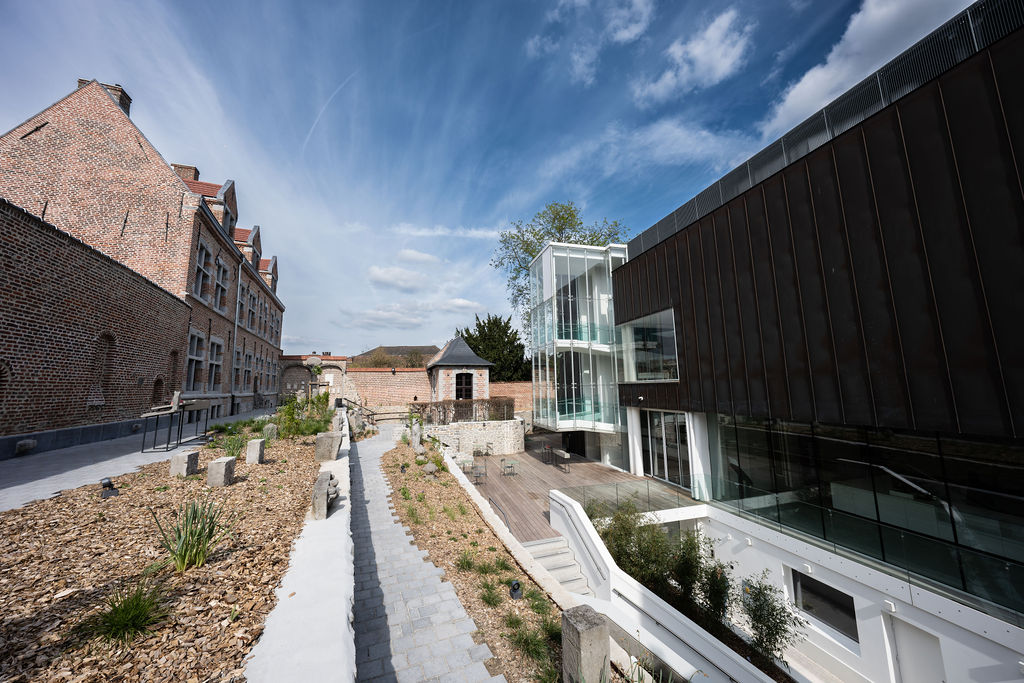
Discover the CAP/"Buttery pear Tree" Garden, which combines a stone collection, social spaces, and permaculture, creating a link between the Museum of Fine Arts and the Collections House.
- Home
- Sites and museums
- CAP/The "Buttery pear Tree" Garden
CAP/The "Buttery pear Tree" Garden
 Kévin Rinclin Photography
 Kévin Rinclin Photography
 Kévin Rinclin Photography
About the activity
Shop
Cloakroom
Toilets
People with limited mobility
Languages
FR
NL
EN
The CAP is a museum complex in the heart of downtown Mons, consisting of three entities:
- The "Buttery pear Tree" Garden
- The Museum of Fine Arts, which hosts temporary exhibitions highlighting the collections of Mons as well as high-quality international exhibitions.
- The former Jean Lescarts house, recently renovated to house the Collections House, a museum site dedicated to the history of Mons through the town's collections.
The "Buttery pear Tree" Garden is named after a pear variety developed in 1759 by Nicolas Hardenpont at the foot of Mont Panisel (Mons).
The garden is divided into three sections:
- The botanical-historical garden, which blends sculptures and plant species associated with local history.
- The permaculture garden, to which citizens are invited to contribute.
- The "guinguette," a place for relaxation with snacks.
Freely accessible from Rue Neuve, the garden invites visitors to stroll and discover, either alone or with company.
General Information
Contact Information
Prices
Free
Additional information
Free admission via the rue Neuve.
Practical Information
Individual visits
Individual visits on request - Permanent open visit
Reviews
🇬🇧🇫🇷🇩🇪🇳🇱
4.5/5
4.5/5
These reviews are collected from Google Reviews
R
Romina Verstichelen🇬🇧
2 September 2026
WANDERFUL!
K
K S🇬🇧
21 August 2026
Very friendly advice - though we ended up not visiting as we were told the permanent exhibition is very small and no current special exhibition.
I
Ilario Di vita🇫🇷
2 August 2026
Musée exceptionnel avec des magnifiques expositions qui change souvent.Et le personnel est très engagé.
D
Dia🇬🇧
21 July 2026
I visited the Beaux-Arts for the Multiple Perspectives exhibition, which displayed Belgian artists and their works, mainly related to communism and liberty in the 20th century. There were a lot of intriguing and beautiful masterpieces. I spent approximately an hour and a half looking around. The only thing I felt uncomfortable with was that there weren’t any explanations in English on the walls, so I needed to follow the mobile instructions all the time, which distracted me from enjoying the artworks.
C
Christophe Sokal🇫🇷
14 June 2026
Lieu tres accueillant et toujours de belles expositions. Celle sur les artistes belges inspirés par le communisme est remarquable.